The days of goalkeepers hitting the deck for a sneaky tactical timeout are numbered. English football has just greenlit a bold new trial that could reshape how the Premier League, EFL, WSL, and National League handle one of the sport’s most annoying loopholes.
Starting this season, if a goalkeeper goes down for treatment, one of their teammates has to leave the pitch. It’s that simple. And it’s about time.
How Does the New Goalkeeper Rule Actually Work?
Here’s the process, step by step:
- The referee signals for a physio to treat the goalkeeper.
- The team’s manager then has 10 seconds to nominate an outfield player to leave the pitch.
- That player must stay off for a minimum of one minute from when play restarts.
- If no player is nominated in time, the captain leaves automatically.
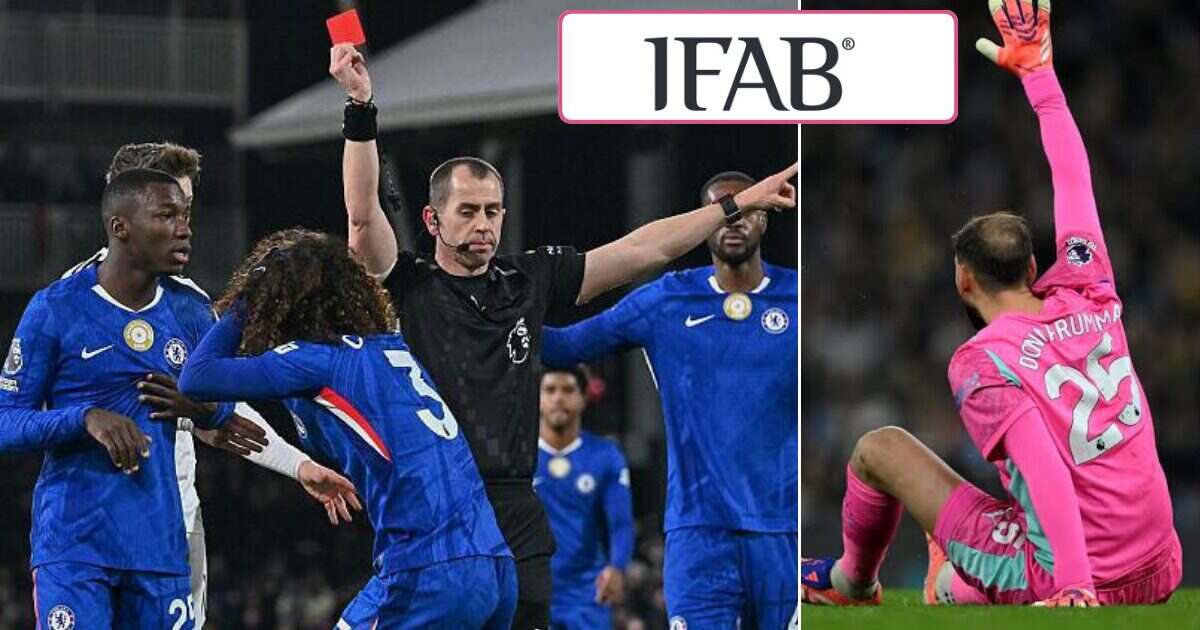
Pro Ref, the body that manages Premier League match officials, confirmed the trial has received official approval from the International Football Association Board (IFAB). It’ll be rolled out across men’s and women’s professional football in England.
The first match expected to feature the rule? The Carabao Cup preliminary round clash between Tranmere and Rochdale on August 1.
There are sensible exceptions built into the trial. The rule won’t apply if a goalkeeper waves away the physio, if they’re bleeding, if they’ve collided with an outfield player, or if a foul has been committed against them that requires immediate attention.
It isn’t a punishment for genuine injuries. It’s a deterrent against fake ones.
Why Now? The Donnarumma Incident That Sparked It All
This didn’t come out of nowhere. The issue hit a boiling point last season when Leeds United boss Daniel Farke publicly called out Manchester City goalkeeper Gianluigi Donnarumma.
During City’s 3-2 win at the Etihad, Donnarumma went down after Leeds had pulled a goal back and were building momentum. While he received treatment, Pep Guardiola gathered his players for a tactical talk. Leeds lost late to a Phil Foden winner.
Farke didn’t hold back: “It is not the elephant in the room. Why he went down, it was obvious. It is smart.”
He continued: “It is within the rules, so I can’t complain. It is up to the authorities to find a solution.”
Well, the authorities listened. The tactic had been growing since at least the COVID era. Goalkeepers would sit on the turf, wave over the physio, and the whole team would huddle near the touchline. Everyone knew what was happening. Nobody could stop it.
Now they can.
A Bigger Picture: English Football’s War on Time-Wasting
The goalkeeper trial doesn’t exist in isolation. It’s part of a wider crackdown heading into 2026-27. Here’s what else is changing:
- A five-second countdown on throw-ins and goal kicks. Take too long on a throw-in? The other team gets it. Dawdle over a goal kick? That’s a corner to the opposition.
- A 10-second limit for substituted players to leave the pitch. Exceed it, and the replacement can’t come on until the next stoppage after a full minute has passed.
- Injured outfield players must now stay off the pitch for at least one minute, up from 30 seconds previously.
These rules were tested at the 2026 World Cup and proved effective enough for English football to adopt them domestically. The eight-second goalkeeper possession rule, introduced last season, laid the groundwork.
Australia’s A-League is trialling a similar goalkeeper timeout rule, though their version always removes the captain rather than letting the manager choose. English football went with the more flexible approach, but the message is the same globally: stop wasting time.
IFAB will monitor the trial throughout the season. If it works, it could become a permanent worldwide law change from 2027-28.
Can it survive the chaos of a tight Premier League title race without controversy? Probably not. But football argues over every new rule. That doesn’t mean this one isn’t needed.