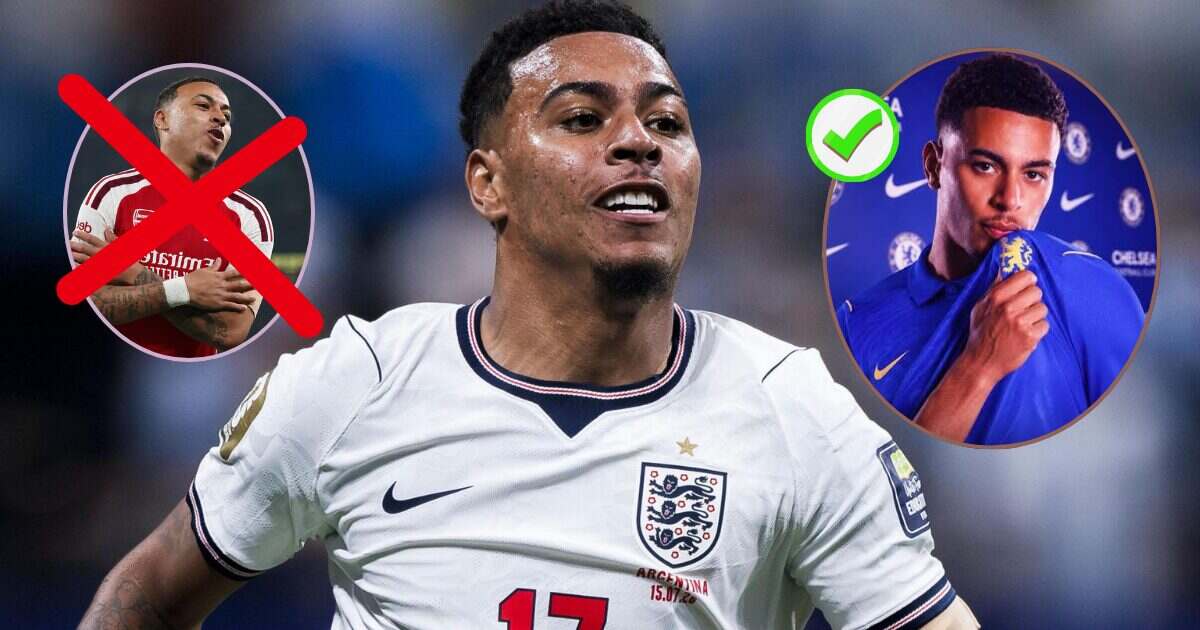
It was supposed to be Arsenal’s deal. For weeks, Morgan Rogers looked destined for the Emirates. Then Chelsea walked in, dropped £117 million on the table, and it was over before Arsenal could even make a formal bid.
The Premier League champions have been chasing Rogers all summer. Personal terms were reportedly close. Fabrizio Romano described the player-side agreement as “almost done.” Everything pointed toward a move to north London once Rogers returned from the World Cup with England.
So what went wrong?
Chelsea Moved Fast — Arsenal Didn’t Move at All
According to Romano, Arsenal’s plan was straightforward. They’d wrap up the Christos Tzolis signing from Club Brugge, then open formal talks with Aston Villa over Rogers the following week.
Chelsea had other ideas.
David Ornstein broke the news on Saturday evening: Chelsea had reached a verbal agreement with Villa for a British-record £117 million fee. The deal surpasses the £116 million Manchester City paid Nottingham Forest for Elliot Anderson just weeks earlier.
Rogers will sign a six-year contract, with the option of a seventh season, and is expected to complete a medical on Monday.
The speed of Chelsea’s move was striking. Romano described it as a “pre-hijack” — Chelsea didn’t come to negotiate. They came to close.
“Chelsea had a direct meeting with Aston Villa. This direct meeting was very strong by Chelsea, because they wanted to close the deal immediately,” Romano explained on his YouTube channel.
New Chelsea boss Xabi Alonso reportedly called Rogers personally to seal the deal. That kind of urgency from a manager can make all the difference.
Why Arsenal Pulled Out
Here’s where it gets interesting. Arsenal weren’t outbid. They never actually bid at all.
The Gunners reportedly weren’t willing to go near £117 million. Their target was a fee somewhere between £90 million and £100 million. Villa, however, had made it clear they wouldn’t accept anything below nine figures.
It’s a familiar pattern. Arsenal’s transfer philosophy under Mikel Arteta and sporting director Andrea Berta has been disciplined, sometimes to a fault. They don’t panic. They don’t overpay.
That approach won them the Premier League title last season. But it also means they occasionally lose out when a rival decides to blow past the budget.
Romano confirmed that Arsenal’s pursuit of Tzolis — a £34 million deal now agreed with Club Brugge — was entirely separate from the Rogers chase. Arsenal always intended to sign both. One as Leandro Trossard’s replacement, the other as a statement addition to the attack.
Now they’ve got one, not the other.
Where Do Arsenal Go From Here?
The Tzolis deal is solid business. The Greek international scored 23 goals and added 17 assists for Club Brugge last season. Sky Sports confirmed his fee sets a new Belgian Pro League outgoing record. He gives Arteta a direct, hard-working option on the left.
But he’s not Rogers. And Arsenal know it.
BBC Sport’s Sami Mokbel reported in June that PSG winger Bradley Barcola was on Arsenal’s radar as an alternative. The France international, also 23, has been a consistent performer for the Champions League holders. He notched 13 goals and seven assists last term despite often coming off the bench.
Barcola has two years left on his PSG contract, meaning a deal could come in significantly cheaper than what Villa demanded for Rogers. Liverpool are also monitoring his situation, though, so Arsenal won’t have a clear run.
As of now, there’s no indication that Arsenal have made contact with Barcola’s camp. But with Rogers heading to Stamford Bridge, the urgency just increased.
Arsenal’s summer isn’t over. Far from it. But the Rogers saga stings. When you’re “almost there” on personal terms and your biggest rival swoops in overnight, it raises uncomfortable questions about timing and ambition.
The Gunners need to respond. Whether it’s Barcola, another target, or someone nobody’s linked yet — the next move matters.