The man who built modern Arsenal just drew a very clear line in the sand. And honestly? It was long overdue.
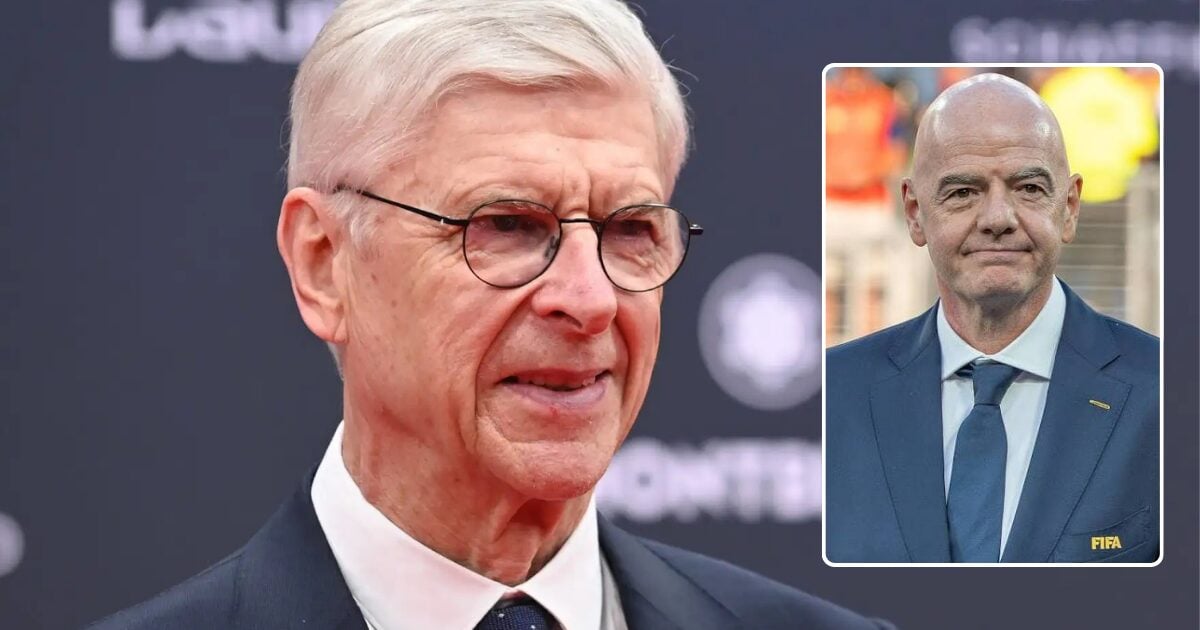
Arsene Wenger, FIFA’s Chief of Global Football Development, has finally broken his silence on the chaos surrounding Gianni Infantino’s failed plan to privatize the World Cup. After a full week of saying nothing, the legendary former Arsenal boss published a statement clarifying exactly what his job at FIFA covers — and, more importantly, what it doesn’t.
So why does this matter? Because Wenger’s reputation was at stake.
What Wenger actually said
The statement, released through The Athletic on Tuesday, August 4, was direct and left little room for interpretation.
Wenger outlined his responsibilities at FIFA:
- Overseeing data analysis of the game
- Running FIFA’s online training centre
- Developing youth education through 60 academies across 60 countries
- Managing youth competitions worldwide
- Serving as a technical adviser to IFAB
He then addressed the elephant in the room. He wasn’t part of the FIFA Forward Enterprise plan. He found out about it through media reports, just like everybody else.
His words carried weight: he called the decision to withdraw the proposal “absolutely necessary and beyond question.” He added that he believes in “an independent FIFA that serves our game with commitment, transparency, and integrity.”
That’s a pointed message. You don’t use language like that unless you’re deliberately putting distance between yourself and the person who made the mess.
The scandal that forced his hand
For context, the FIFA Forward Enterprise was a plan announced on July 28 to create a commercial subsidiary controlling World Cup operations. Under the proposal, around 20% of the entity’s shares would be sold to private investors, including a group led by Joshua Kushner, brother of Jared Kushner.
The reaction was immediate and brutal.
UEFA’s 55 member associations voted unanimously to boycott all FIFA competitions — including the 2027 Women’s World Cup and the 2030 men’s tournament — if the plan went ahead. UEFA called the entire process “shabby, back room, opaque.”
It didn’t stop there. CONCACAF and the Asian Football Confederation also rejected the proposal. Carlos Cordeiro, a senior FIFA adviser and former U.S. Soccer Federation president, resigned in protest, calling it “a bad deal for football.”
Within roughly 48 hours, Infantino pulled the plug.
But the damage was done. UEFA declared it had lost confidence in Infantino’s leadership and began pushing for his removal. UEFA president Aleksander Ceferin has since urged European federations to withdraw their letters of support for Infantino’s re-election. Several national associations — including Wales, Sweden, and Serbia — have already done so.
UEFA Vice President Laura McAllister summed up the mood: trust in FIFA’s president has been “badly shaken.”
Why Wenger’s silence was so loud
Here’s what made this awkward for Wenger. He’s easily the most recognizable figure in FIFA’s executive team. Twenty-two years at Arsenal. Three Premier League titles. The Invincibles. That kind of profile doesn’t just disappear.
So when FIFA’s biggest scandal in years erupted and Wenger said nothing for seven days, people noticed. His name even appeared alongside 17 other FIFA officials in UEFA’s legal filing — a document that treats everyone listed as complicit in what UEFA considers a governance failure.
That’s a brutal position for someone who’s spent decades cultivating a reputation as one of football’s most principled figures. His entire post-Arsenal career at FIFA has been built around youth development, education, and growing the game in underserved regions. Getting dragged into a corporate sell-off scheme was never part of the plan.
His statement, then, wasn’t just clarification. It was self-preservation. And it was necessary.
The broader question now is whether Infantino can survive this. UEFA is exploring the possibility of calling an emergency FIFA Congress, which would require 43 of 211 member associations to trigger a formal vote of no confidence. With three of six continental bodies already opposed, it’s not far-fetched.
For Arsenal fans, Wenger’s integrity matters. He remains one of the club’s most beloved figures. And for the wider football world, his willingness to call the withdrawal “absolutely necessary” suggests he knows exactly how close FIFA came to crossing a line it couldn’t uncross.