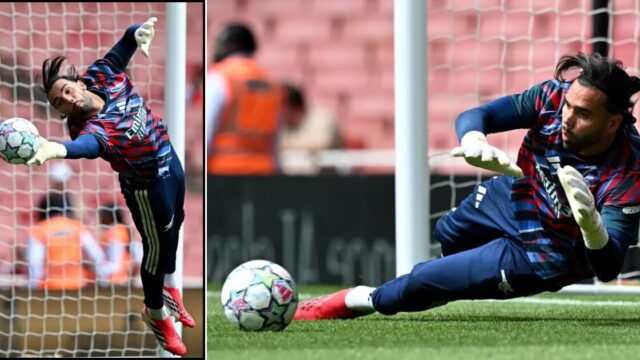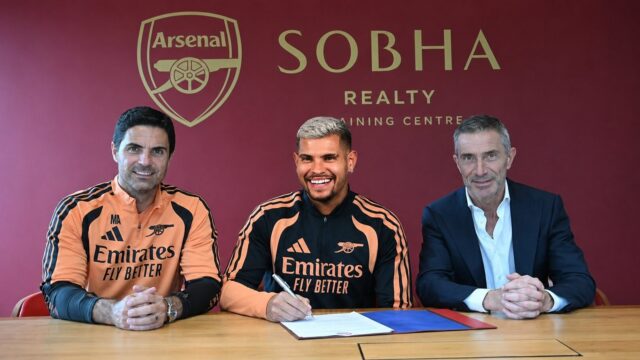
Mikel Merino wasn’t supposed to be here. Five months ago, he couldn’t walk. Now he’s dragging Spain into the World Cup semi-finals with a habit for late goals that borders on the absurd.
The Arsenal midfielder scored in the 88th minute against Belgium on Friday night — just 117 seconds after coming off the bench — to seal a 2-1 victory at SoFi Stadium in Los Angeles. It’s his second consecutive knockout winner as a substitute. And honestly? It’s getting hard to call this coincidence.
Two minutes, two knockout goals, zero starts
Let’s put the numbers in perspective. Across Spain’s last two World Cup knockout matches, Merino has played a combined nine minutes plus stoppage time. He’s scored twice. Both goals were match-winners.
Against Portugal in the Round of 16, he came on in the 85th minute and slotted home a 91st-minute winner from a Ferran Torres through ball. Against Belgium, the script barely changed. He replaced Dani Olmo in the 86th minute. Two minutes later, he pounced on a spill from Belgium’s substitute goalkeeper Senne Lammens after Pau Cubarsi’s shot was parried.
He’s now the first player in World Cup history to score winning goals as a substitute in two separate knockout matches.
“I don’t believe this is a coincidence”
Merino isn’t buying the luck narrative. After the Belgium match, he was clear about what drives these moments.
“If the ball has fallen to me three times in key moments, it is because I prepare myself for when the moment comes,” he said.
He also revealed that manager Luis de la Fuente kept instructions simple. “He told me I was going on as the number 10, and when the game finished he told me I was incredible. Those are the two things he said to me.”
De la Fuente, who’s coached Merino since Spain’s youth teams, has never hidden his admiration. “He’s world-class,” the Spain boss said earlier in the tournament. “Mikel never disappoints. He’s a safe bet.”
The long road back from injury
What makes this run even more remarkable is where Merino was in January. A stress fracture in his foot, sustained during Arsenal’s 3-2 defeat to Manchester United, required surgery and left him unable to walk for two months. He got around on a mobility scooter.
At 30 years old, that kind of setback can end a tournament dream.
“When I got the news that I was going to be out around five months, I could only think about missing the World Cup,” Merino admitted in May. “I was devastated.”
He returned to training just before Arsenal’s Champions League final and made Spain’s World Cup squad. The timing couldn’t have been tighter.
A pattern that goes back to Euro 2024
This isn’t new for Merino. At Euro 2024, he headed in the winner against Germany in the 119th minute of their quarter-final, helping Spain go on to win the entire tournament. That goal came at the same stadium where his father scored for Spain decades earlier.
So when you add it up — a Euro 2024 quarter-final winner, a World Cup Round of 16 winner, and now a World Cup quarter-final winner — you’re looking at a player who thrives when the pressure’s at its highest.
What it means for Spain’s semi-final against France
Spain now face France in a blockbuster semi-final, their deepest World Cup run since they lifted the trophy in 2010. Don’t expect Merino to start. He hasn’t started a single game this tournament.
But does it matter?
As Micah Richards put it on BBC One after the Belgium match: “They’re getting over the line. It’s about moments in games, and Merino in the last two games has certainly had his moments.”
Spain weren’t at their dazzling best against Belgium. They dominated possession and created chances — generating 2.08 xG to Belgium’s 0.38 — but it took Merino’s instinct to break the deadlock. Fabian Ruiz had given Spain the lead in the 30th minute before Charles De Ketelaere equalised just before half-time. The second half was a tight, nervy affair.
Then Merino arrived. Two minutes. One goal. Job done.
The bottom line
There’s something poetic about Merino’s journey. From a fractured foot and a mobility scooter to the man Spain’s World Cup hopes are riding on. He doesn’t need 90 minutes. He barely needs five.
France should be worried. Not because Spain are perfect — they’re not. But because they’ve got a player on the bench who keeps proving that the most dangerous moments in football aren’t always the ones you plan for.